


INNOVATION
Pulsar: Anduril unveils AI-powered electromagnetic warfare tech to hunt drones
Pulsar’s architecture is modular and open, ensuring that the system can be rapidly updated over time.
Christopher McFadden
Published: May 06, 2024 06:06 AM EST
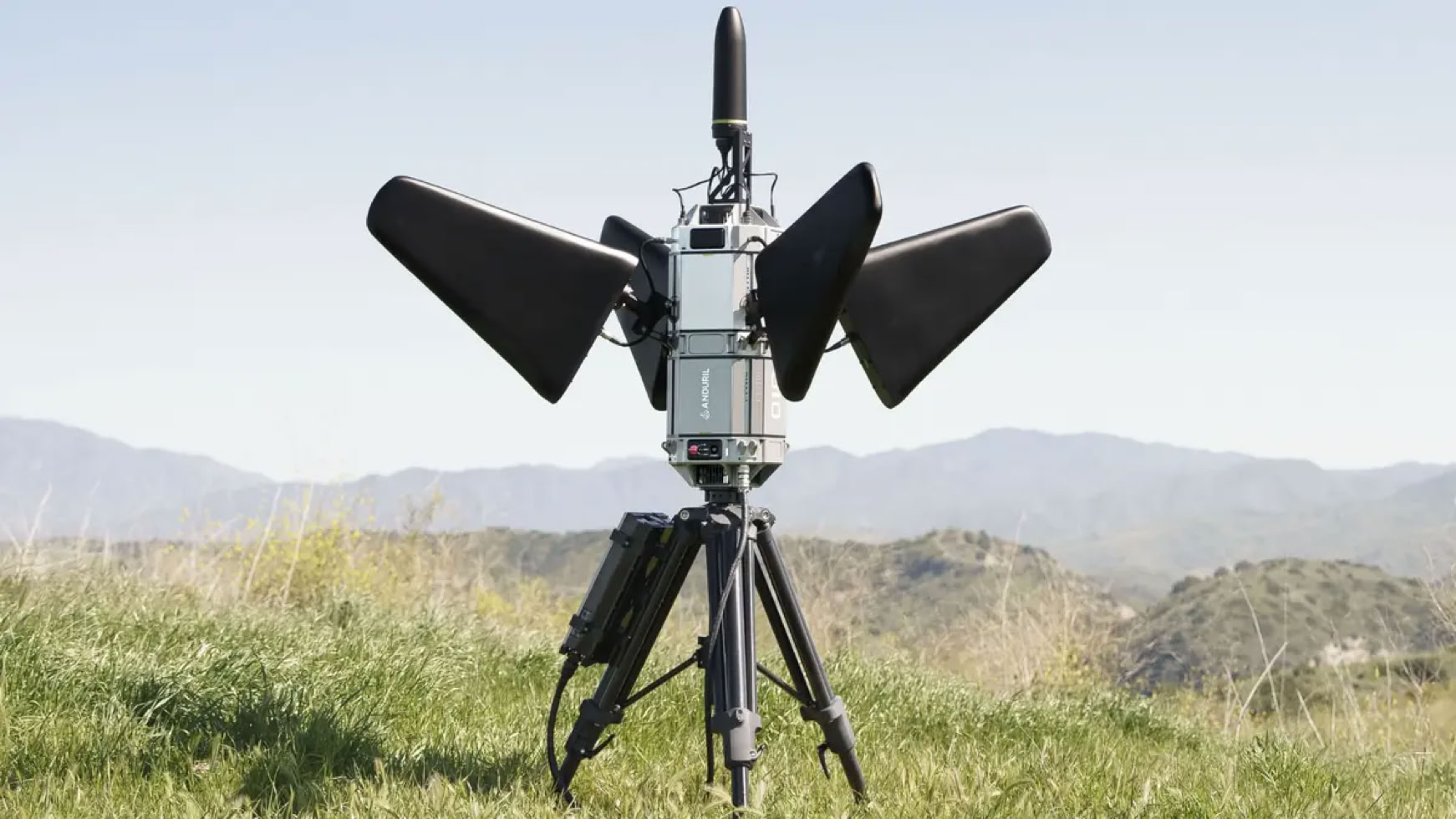
Image of a ground-mounted Anduril Pulsar.
Anduril has just unveiled its family of modular, multi-mission-capable electronic warfare (EW) systems called Pulsar. Powered by artificial intelligence (AI), Pulsar can be deployed statically on vehicles or aerial drones.
According to Anduril, the family of EW systems can rapidly identify and defeat a range of existing and future EM threats, including small and medium-sized drones. It has been developed to help provide an adaptable counter to the ever-evolving world of drones, counter-drones, and EW jamming.
The need for such systems has become abundantly clear with the rapidly evolving drone-counter drone tactics of the war in Ukraine. Here, EW tactics have evolved rapidly, with an actual arms race of sensing, dodging, disruption, and adaptation unfolding rapidly.
As Anduril explains, developments are now occurring on a weekly, daily, or
even hourly basis. For this reason, future robust EW systems must adapt at lightning speed to remain relevant on the battlefield.
Pulsar offers real-time EW adaptation
“The next generation of EW systems must enable real-time understanding of the spectrum and provide rapid delivery of effective countermeasures against known and new threats across domains and modalities,” Anduril explains in its press release.
And that is the very purpose of the Pulsar family.
Pulsar is a powerful and compact system that integrates a software-defined radio, a graphics processing unit, and additional diverse computing capabilities. This integration allows radio frequency machine learning (RFML) to identify and adapt to emerging threats at the edge quickly.
The system offers a range of capabilities, including electronic countermeasures, counter-unmanned systems, electronic support, electronic attack, direction finding, geolocation, and other advanced EW capabilities. Pulsar’s modular form factor also makes it highly adaptable.
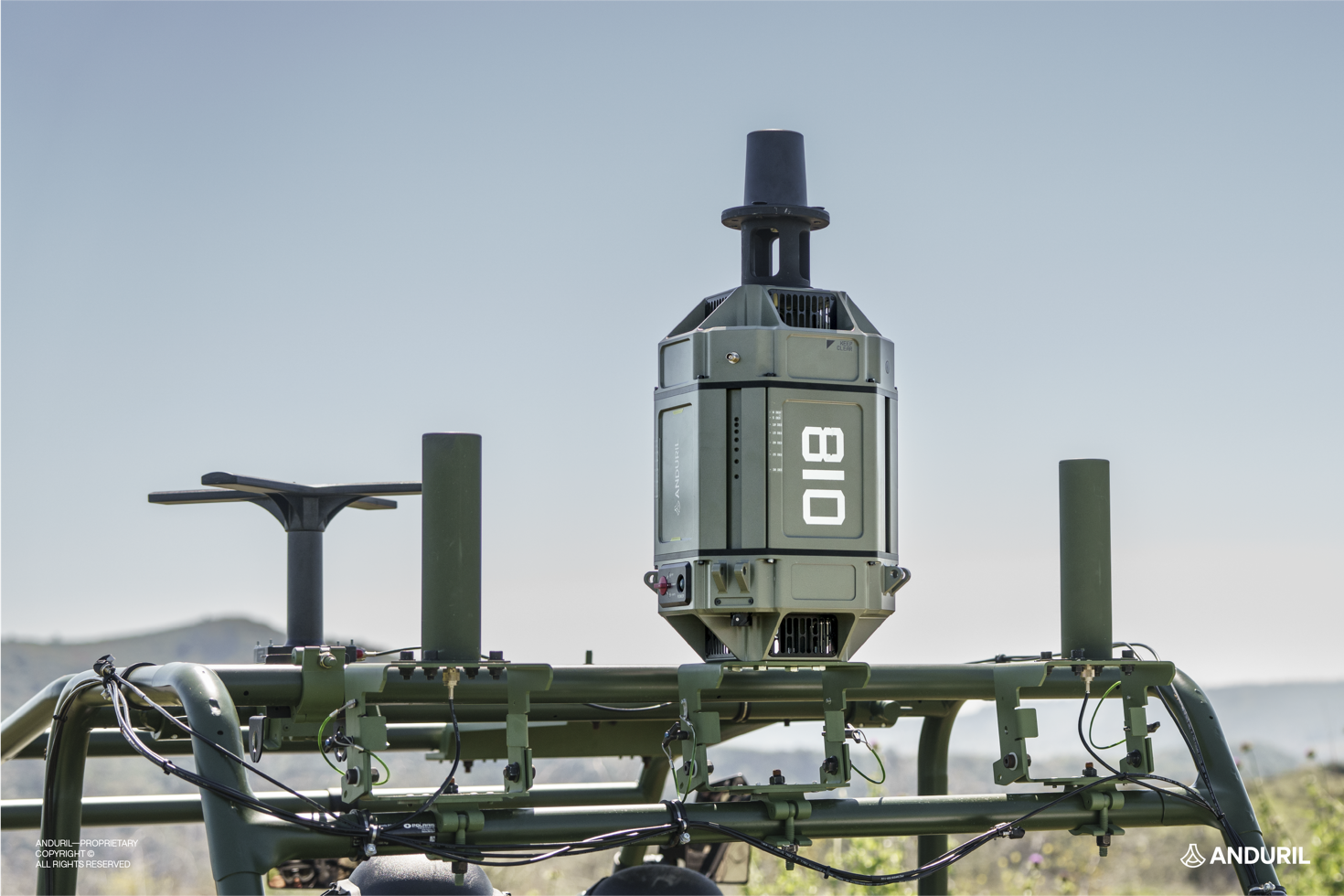
It can be integrated into ground vehicles (Pulsar-V) or aircraft (Pulsar-A) to aid distributed EW operations across multiple domains.
Pulsar can intelligently and autonomously scan a wider range of the electromagnetic spectrum, detect known threats and anomalous events, and significantly reduce the time needed to deploy new EW effects to hours and days.
“We’ve been developing our Pulsar family of systems to support operational deployments worldwide, including to combat zones, since 2020,” said Sam El-Akkad, General Manager of RF/EW Systems at Anduril.
EW warfare of the future
“Built to survive and win in highly-congested and contested electromagnetic environments, Pulsar enables warfighters to counter state and non-state actors employing EW capabilities integrated with other advanced technological systems operating across the electromagnetic spectrum and cyberspace domain,” he explained.
Pulsar-V mounted onto a tactical vehicle. Source: Anduril
Pulsar boasts an open architecture allowing seamless integration with various EW and command-and-control systems. This integration creates a unified network of EW capabilities, providing more comprehensive coverage and coordinated effects across distributed operations.
Additionally, Pulsar offers a software development kit that enables continuous development and integration with third-party providers. This feature allows the rapid integration of best-of-breed capabilities to keep pace with new threats and missions.
“Pulsar is an agile software-defined EW system that can swiftly adapt to changing threats and mission needs in all domains for dynamic operations of today and tomorrow,” Anduril explains.