


By Jijo Malayil
World’s first terahertz sensor offers 984 feet range and weather-proof vision for cars
Teradar Summit’s solid-state THz sensor offers 300m range, 0.13° resolution, 3D point clouds, and all-weather ADAS/L2-L5 support.
Teradar estimates that Summit's breakthrough vision can prevent up to 150,000 road deaths each year.
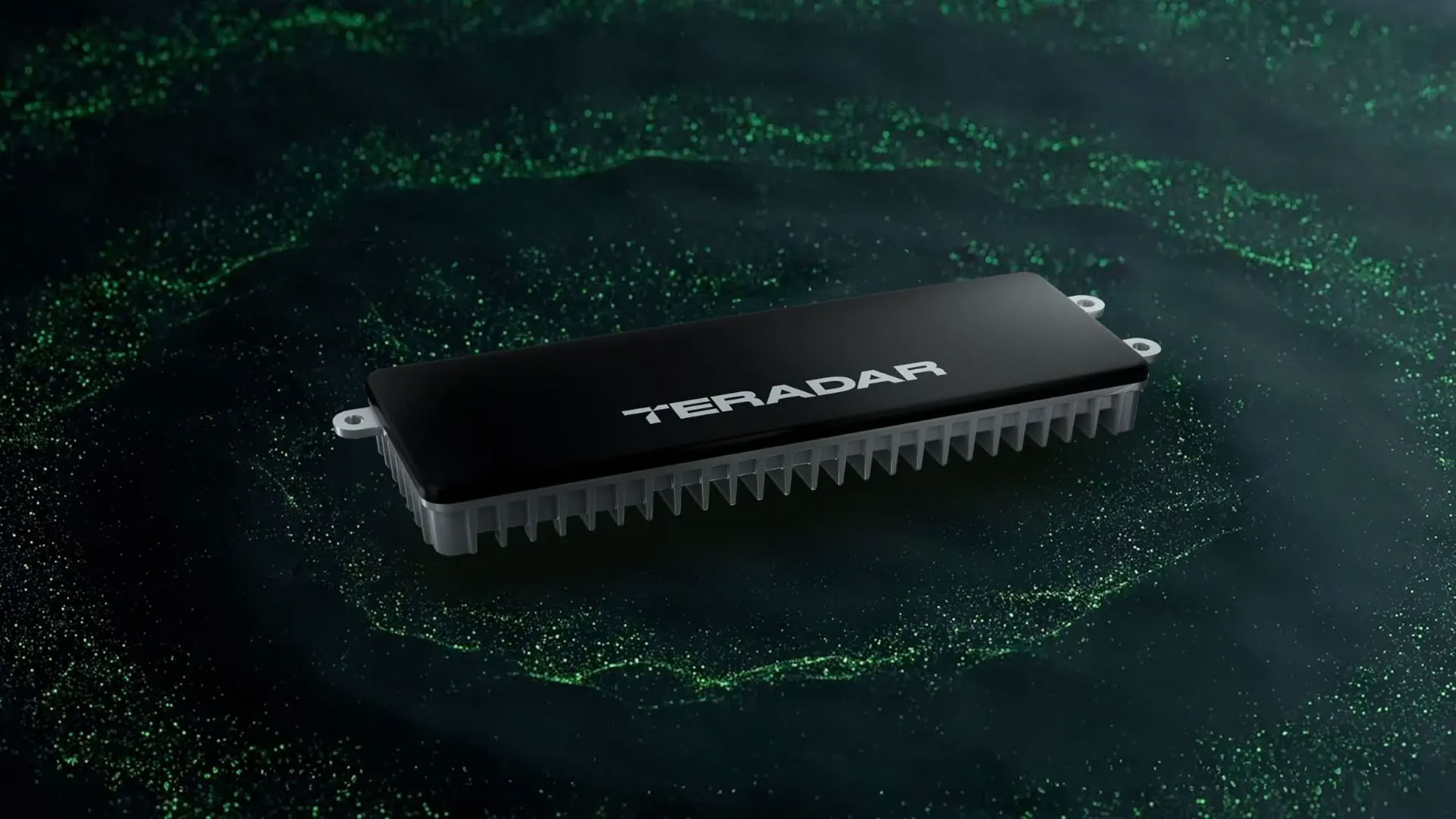
US-based Teradar unveiled its flagship Teradar Summit sensor at the Consumer Electronics Show (CES 2026).
The company claims the sensor is the industry’s first long-range, high-resolution terahertz (THz) vision sensor built to perform reliably in any weather.
Designed to enhance advanced driver assistance systems (ADAS) and support L3-L5 vehicle autonomy, Teradar claims the customizable chip has drawn interest from Tier 1 suppliers and automotive OEMs worldwide.
Teradar currently has eight development partnerships in the US and Germany and plans to bid on high-volume production programs in 2026, aiming to start production in 2028.
Last week, Columbia University engineers created all-optical nanosensors that change color or intensity in response to force, enabling wireless readouts.
Autonomy gets clearer
Terahertz (THz) waves, which sit between radar and lidar on the electromagnetic spectrum, have long been seen as promising for sensing because they combine high resolution with the ability to see through almost any weather.
Until recently, technology limitations made THz sensing impractical. Teradar’s new THz chip design has changed that, making this sensing feasible for real-world applications, the Boston-based startup claims.
The company’s Modular Terahertz Engine (MTE) is a fully solid-state sensor system built from proprietary transmit, receive, and processing chips. This setup provides clear, reliable detection of small objects at long distances. It works in all conditions—day or night, rain, fog, snow, or sleet—without losing accuracy.
The Teradar Summit uses a solid-state digital phased array and delivers a 300-meter range (984 feet) with a native resolution of 0.13°. It produces detailed 3D point clouds with Doppler data, capturing range, direction, elevation, and relative speed. Designed for advanced vehicles, it supports autonomous systems from L2 to L5. In short, the Summit gives vehicles precise, reliable sensing in any environment, making it a major step forward in automotive safety and autonomy.
According to the firm, this technology bridges the gap left by traditional radar and lidar, opening the door for safer, more capable self-driving and advanced driver assistance systems in the next generation of vehicles.
“By delivering visibility through fog, rain, snow, and sun glare, Teradar’s terahertz sensors could help prevent up to roughly 150,000 road deaths every year worldwide. We’re opening a sensing domain that simply hasn’t existed in automotive before, giving vehicles the ability to see in conditions where today’s systems break down,” said Matt Carey, CEO and Co-Founder of Teradar, in a statement.
Next-gen vision
In November, the company emerged from stealth to unveil the world’s first commercial terahertz sensing technology. Their breakthrough chip delivers up to 20 times the resolution of current automotive radar, enabling ultra-high definition, all-weather perception for next-generation vehicles.
Founded in Boston by experts from MIT and Stanford with over 20 years of experience in automotive engineering, chip design, photonics, and systems engineering, Teradar’s solid-state MTE provides customizable, long-range detection for ADAS (L1-L2) and autonomous driving systems (L3-L5).
“Teradar has made terahertz vision a reality by bringing unprecedented resolution and awareness at long range in any weather. This breakthrough provides vehicles the perception needed to anticipate danger, avoid accidents, and, ultimately, save lives,” said Carey, in a statement earlier.
Teradar is actively collaborating with five leading automotive OEMs in the US and Europe, as well as three Tier 1 suppliers, and aims to secure a production program by 2028. Beyond automotive applications, the technology has potential in defense, healthcare, and manufacturing.
Experts highlight that terahertz sensors could prevent numerous fatal accidents worldwide each year. With Teradar’s innovation, all-weather, high-resolution sensing is poised to redefine the capabilities of ADAS and fully autonomous vehicles, marking a transformative leap in automotive safety and perception.